SaaS Startup Marketing Tips: How to Get Your First 100 Users

SaaS Marketing7 min read

Stop refreshing your analytics. Here is the step-by-step guide to building the signals that actually drive users to your new tool.

Too Long; Didn't Read

  • Stop waiting for users: 'Build it and they will come' is a lie in 2026. You need to actively push for initial visibility.
  • Build foundational signals: Submit your tool to high-authority directories immediately to establish domain trust.
  • Leverage community channels: Use Reddit and niche forums to solve problems, not just pitch your product.
  • Engineering as marketing: Create free, standalone side-tools to capture leads cheaper than any ad campaign.
You’ve just created your own tool, a slick web asset, a Chrome extension, or a micro-SaaS. Heck, maybe you’ve "vibe coded" an AI calculator over the weekend. You likely thought that if the product was good enough, the users would just show up. But they didn’t.
For some reason, you keep refreshing your Google Analytics, but the real-time user count stays at zero. You have no web presence. Here is the hard truth: If you build it, they will not come. Not in 2026.
You need signals. You need to tell the algorithms and the people that you exist. This guide cuts through the fluff of generic advice and gives you the exact saas startup marketing tips you need to go from zero to your first 100 paying customers without blowing a non-existent budget.

Prerequisites: Before You Start Marketing

Don't waste traffic on a leaky bucket. Before you execute the steps below, ensure you have these three things ready:
  • A Value-First Landing Page: Your headline must clearly state what problem you solve, not just what features you have.
  • Analytics Installed: You need Google Analytics 4 (GA4) or a privacy-friendly alternative to track where users come from.
  • A 'Lead Magnet' or Free Tier: Asking for a credit card immediately is the hardest way to grow. Have a free trial, a freemium tier, or a waitlist.

Step 1: Build Foundational Signals (Directory Submission)
This is the step most technical founders skip because it feels 'boring.' You have zero domain authority. Google doesn't trust you. What nobody told you is that you can go to tech-centered directory sites, submit your tool, and start to build your first foundational backlinks.
You need to create noise. This is exactly how many founders get their first 100 customers with zero paid ads—just pure hustle.
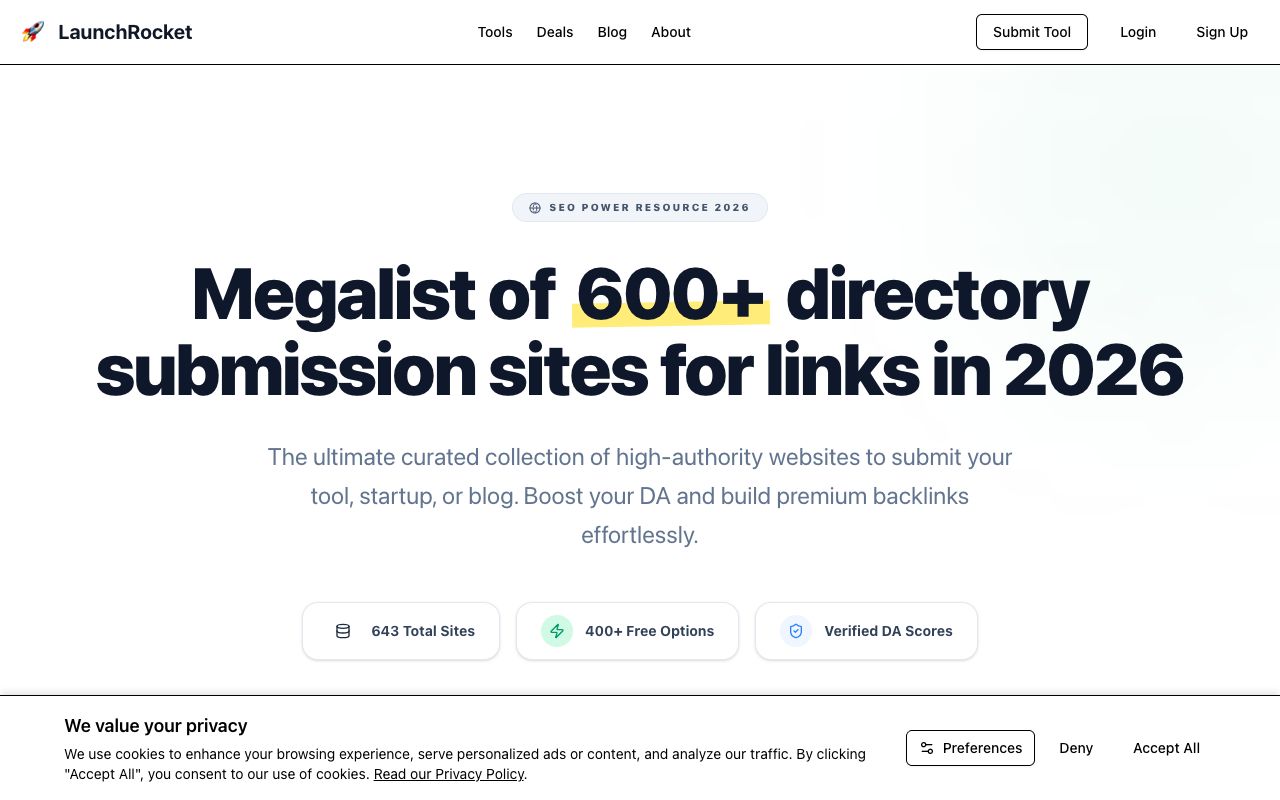
Action: Head over to LaunchRocket.io. They provide a comprehensive list of directory sites tailored for startups. Don't just look at it; go through that list.
LaunchRocket Dashboard Screenshot
Screenshot of LaunchRocket interface
The Workflow: Zero in on the 50 most relevant directories for your niche. Spend the next few days 'going ham' and submitting your site to every single one of them. This creates the 'signals' search engines need to start ranking you.
Troubleshooting Tip: If you get rejected from a directory, it’s usually because your description was too salesy. Write your submission as a factual description of the tool, not a marketing pitch.
For a deeper dive on which directories move the needle, read our guide on Best SEO Directories: 7 High-Impact Sites for 2026 Ranking.

Step 2: Infiltrate Communities (The Reddit Strategy)

Once your foundational links are live, you need actual humans. The best place to find them is where they are already asking questions about the problem you solve. In 2026, Reddit is essentially a search engine for opinions.
Do not just post 'Check out my tool.' You will get banned. Instead, find threads where people are complaining about the problem your SaaS solves.
The Workflow: Use tools to monitor keywords related to your startup on Reddit. When a relevant conversation pops up, jump in with a helpful answer. Only link your tool if it genuinely helps the OP (Original Poster). If you need help managing this, check out our list of the 10 Best Reddit Marketing Tools to Grow Your Business (2026).
Troubleshooting Tip: If your posts are getting removed, your account is likely too new. Spend 2 weeks commenting on other topics to build 'Karma' before you start mentioning your product.

Need a Launch Strategy?

Don't guess what to do next. Get our comprehensive checklist for launching your B2B product.

Get Free Checklist

Step 3: Engineering as Marketing (Free Tools)

If you are a developer, code is your cheapest asset. Instead of spending your saas startup marketing budget on expensive ads, build a 'micro-tool' that solves a tiny part of the problem for free.
For example, if you sell an email marketing platform, build a free 'Email Subject Line Tester.' People search for the free tool, use it, and see a 'Powered by [Your SaaS]' link.
The Workflow: Identify a high-volume search keyword (e.g., 'PDF compressor', 'ROI calculator'). Use a tool like Bolt.new or Lovable to rapidly spin up a simple web app for that specific function. Host it on a subdomain and link it back to your main product.
Troubleshooting Tip: Ensure the free tool requires no login. The moment you ask for an email, usage drops by 90%. Give value first, retarget later.

Step 4: Create 'Alternative To' Comparison Pages

When users are ready to buy, they search for '[Competitor] alternatives'. These users are high-intent. You want to be the answer.
Create blog posts or landing pages that honestly compare your tool against the giants. Be objective. If the competitor is better for enterprise, say so. But highlight why YOU are better for startups or small teams.
For inspiration on how to structure these, look at our breakdown of 9 Best Capterra Alternatives to List Your Tool in 2026. The structure of these posts is crucial for ranking.

Ready to Scale?

Once you have traffic, you need the right tools to convert them. Browse our curated list of top SaaS products.

Join the Community

Comparing Marketing Channels for Startups

Not all channels are created equal. Here is where you should focus your energy based on ROI and effort.

SaaS Marketing Channel ROI Matrix (2026)

ChannelCostTime to ResultsSuitability for Startups
SEO / DirectoriesLowMediumHigh (Foundational)
Community (Reddit/X)Time-HeavyFastHigh (Best for initial feedback)
Paid Ads (PPC)HighInstantLow (Until PMF is proven)
Cold OutreachLowSlowMedium (Good for high-ticket B2B)

Step 5: The Product Hunt Launch

Once you have your directories listed and some initial feedback from Reddit, you are ready for a public launch spike. Product Hunt is still the go-to for this, but don't rely on it for long-term growth.
Prepare your launch assets 2 weeks in advance. Use your newsletter or waitlist to ask for support on launch day. If you aren't sure where to launch besides Product Hunt, check out Top 13 Product Hunt Alternatives to Try in 2026.

Launch Faster with AI

Stop coding boilerplate. Use AI agents to build your marketing assets and tools.

Launch Your App

Pros

  • Directory submissions provide long-term SEO benefits.
  • Community marketing builds genuine relationships and feedback loops.
  • Free tools act as a perpetual source of leads with zero ad spend.

Cons

  • SEO takes 3-6 months to show significant results.
  • Community management is time-consuming and can't be fully automated.
  • Building free tools requires initial development effort.

Pro Tip

Don't automate your Reddit comments. Users can smell AI-generated responses from a mile away.

Use your competitors' names as keywords in your SEO strategy (e.g., 'Better than [Competitor]').

Focus on one channel at a time. Master directories, then Reddit, then content.

Frequently Asked Questions

What is the best marketing strategy for a SaaS startup with no budget?

The best zero-budget strategy is a combination of directory submissions (for SEO signals) and 'Engineering as Marketing'—building free, useful side tools that attract your target audience naturally.

How much should a SaaS startup marketing budget be?

For early-stage startups, your budget should be $0 to $500/month, focused mostly on tools and hosting. Invest your time in content and community engagement rather than ads until you have a proven conversion rate.

Why isn't my SaaS getting any traffic?

Most often, it's a lack of 'signals.' If you haven't submitted your site to directories, aggregators, or engaged in communities, Google and users simply don't know you exist. You need to actively distribute your link.

Is marketing a SaaS startup different from e-commerce?

Yes. SaaS marketing relies heavily on trust, education, and long-term relationship building (LTV), whereas e-commerce is often more transactional and impulse-driven.
#saas marketing#saaS startup marketing
Arielle Phoenix

Arielle Phoenix

Helping founders get their first 100 customers!

Join the Newsletter

Get growth tactics and launch strategies delivered to your inbox for builders like you.

Unsubscribe at any time.