Lofty (formerly Chime)
AI-powered platform transforming real estate productivity through intelligent automation and unified workflow management.
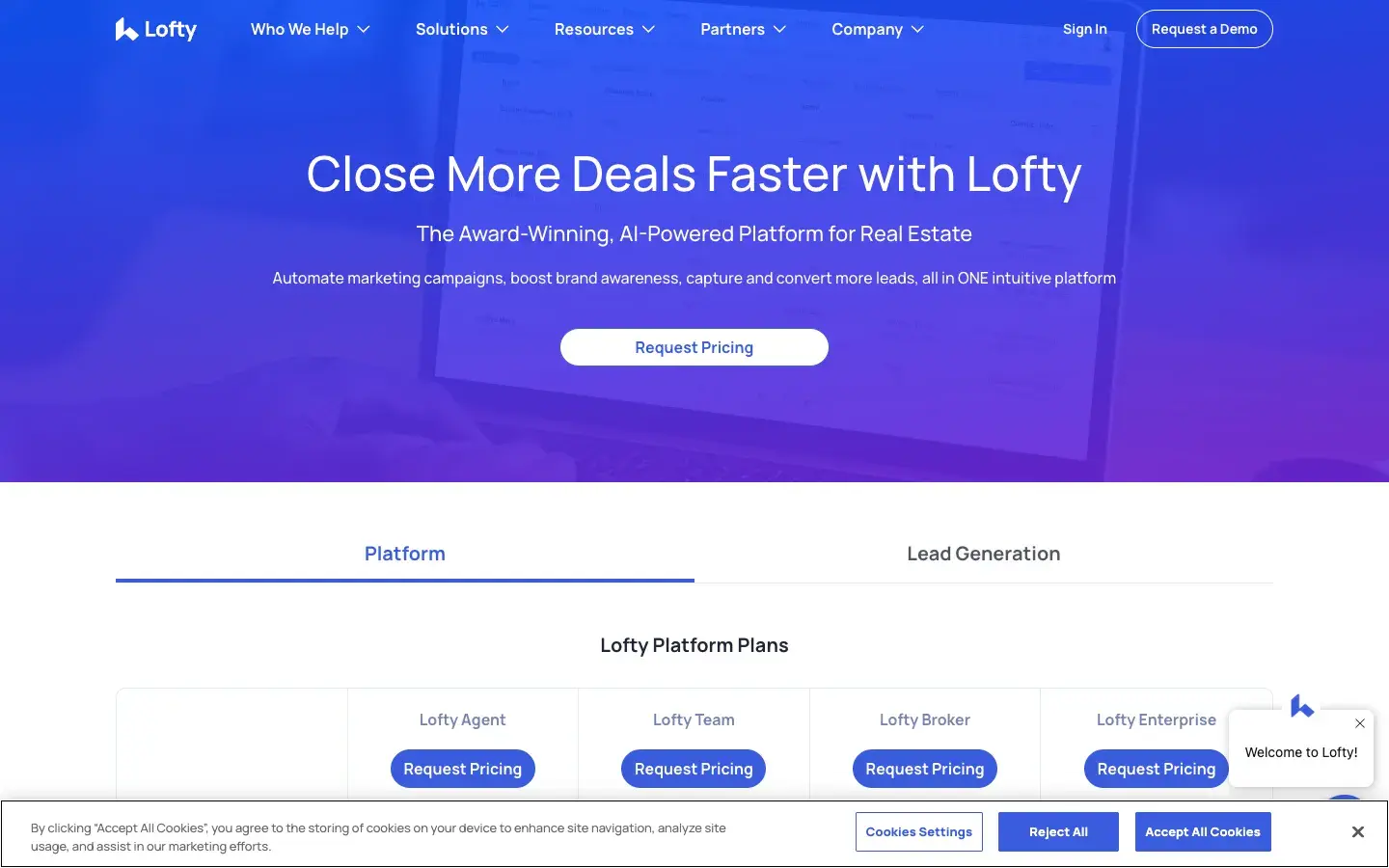
Lofty is an all-in-one AI-powered real estate platform that automates repetitive tasks, integrates CRM, lead generation, marketing automation, and transaction management to help agents and brokerages scale efficiently and close more deals faster.
🚫 The problem Lofty (formerly Chime) solves
Lofty eliminates time-consuming manual data entry and repetitive tasks that drain agent productivity.
By automating marketing, lead management, and administrative workflows, agents redirect focus toward relationship building and deal closure, with clients reporting 41% reduction in manual labor.
✅ How Lofty (formerly Chime) works
Lofty functions as a unified hub combining CRM, IDX, lead management, and AI capabilities into a single platform.
It automates time-consuming manual tasks through intelligent features like AI marketing assistants and automated social media content generation, enabling agents to focus on relationship building and revenue generation.


Founder's Story
"Founded by visionary leaders including CEO Joe Chen and Co-Founder Josh Miller, Lofty evolved from Chime Technologies into a forward-thinking AI platform."
"The company rebranded to reflect its evolution toward AI-driven innovation, now processing over 500,000 leads and serving more than 60,000 agents across the United States."
Do you use Lofty (formerly Chime)?
Reviews
"Reviews praise Lofty (formerly Chime) for saving time and simplifying frontend work with a broad set of high‑quality, free components. Developers highlight smooth React and Next.js use..."
Best For
- Real estate brokers and brokerage owners seeking to scale operations and improve agent retention through technology
- Individual agents and teams needing streamlined workflows, lead management, and automated marketing to maximize productivity
- Enterprise real estate organizations requiring flexible infrastructure supporting both traditional and virtual business models
Top Tool Categories
Built it? Get it seen.
Get featured.
Reach beyond your site.
Put your tool in front of builders and create more ways for people to find you.
- Featured on LaunchRocket.ioA place to showcase your tool.
- 50 directories. Selected for your niche.SaaS, tool and business sites. We handle the submissions.