about 1 hour ago
Beam Goes Open, DeepSeek Flash Gets an Upgrade + a Small NVIDIA Model That Thinks in Loops
AI and SaaS Roundup · 2026-10-18
A new open-weight coding model, a DeepSeek update aimed at getting agent tasks done with less output, and a small NVIDIA model with an adjustable amount of thinking. Quite a range this time. 👀
Beam’s weights are out, under Apache 2.0
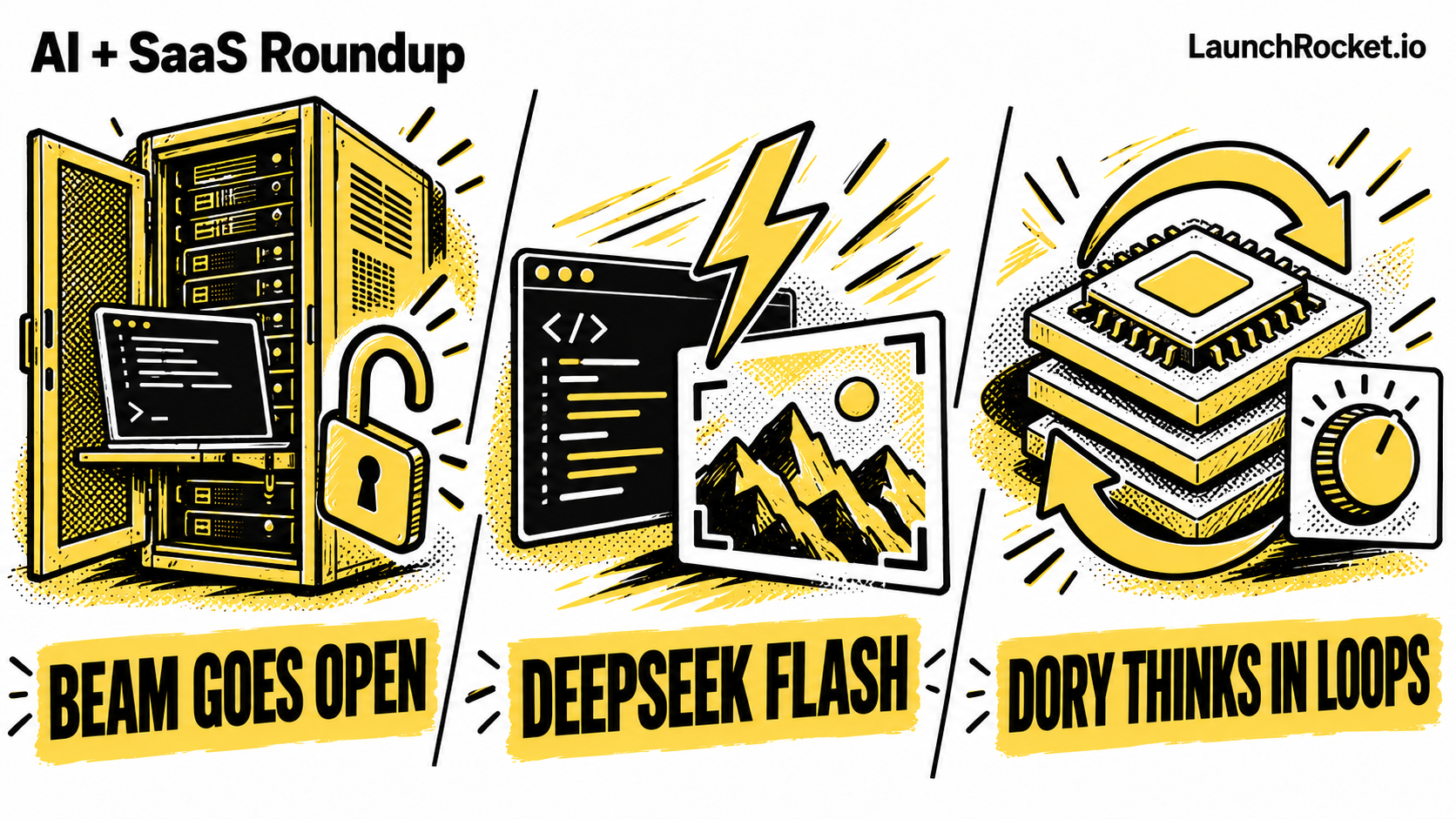
Reflection released Beam’s downloadable weights on 16 October. It’s a text model built for coding, reasoning and multi-step tool use, with a million-token context window and BF16, FP8 and NVFP4 versions.
If you’re building a coding agent, a codebase assistant or a research workflow that calls tools, those are the sorts of jobs Reflection is targeting. The Apache 2.0 licence gives builders a permissive starting point for using and adapting the weights.
The hardware catch: this is a 501B-parameter model. Roughly 23B parameters are active at a time, but that doesn’t turn the full model into a small laptop download. Open weights still come with hosting costs.
Source: Reflection’s official model card
DeepSeek Flash gets a fresh coding and agent update
DeepSeek has released V4.1-Flash-1017, an update to its image-and-text model, with the code and weights under MIT. The team reports improvements in coding, reasoning, visual tasks and agent workflows, alongside shorter outputs and faster task completion. Those are DeepSeek’s results, rather than an independent test.
There’s useful developer plumbing in the release too: its encoding library handles Messages, Chat Completions and Responses-style requests, including tool calls and images. You still have to provide inference, execute the tools and handle transport yourself.
Think screenshot-aware assistants or agents working across code and visual input. This is another large deployment, though. Downloadable weights don’t mean it will run comfortably on an everyday Mac.
Source: DeepSeek’s official release and model card
NVIDIA’s Dory lets one small model do more thinking
Dory is the smaller experiment in this batch: a 4B-parameter NVIDIA model that reuses a block of layers in a loop. You can vary the loop count instead of switching to a different checkpoint whenever you want more compute behind an answer.
NVIDIA provides a quantized GGUF version and an Apple Silicon setup for a local, OpenAI-compatible server. That makes a local assistant or a small coding-tool experiment a concrete possibility. The important setup detail: Dory needs a supported llama.cpp build; the model card links the required source revision while support is being integrated.
The weights use OpenMDW 1.1. NVIDIA suggests starting with two loops, then testing the speed and accuracy trade-off on your own workload. More loops aren’t automatically the fastest option.
Comments
Sign in to join the conversation
Sign InNo comments yet. Be the first to share your thoughts!