27 AI SaaS Ideas That Could Make You Rich in 2026
SaaS Marketing18 min read
Stop building generic wrappers. Here are the boring, specific, and highly profitable AI opportunities everyone else is sleeping on.
Too Long; Didn't Read
- The "AI Wrapper" era is over; 2026 is about Vertical AI and specific workflows.
- The most profitable ideas are "boring" B2B solutions: compliance, logistics, and localized services.
- Don't target "everyone." Target specific roles (e.g., medical coders, procurement officers) with budget.
- Success relies on execution: Build fast with AI coding agents and validate before you scale.
Why Most AI SaaS Ideas Fail (And How Yours Won't)
You’ve seen the lists. AI writing assistant, Chatbot for customer support, AI image generator. Yawn. By the time you read those lists, the market is saturated, and you are competing against incumbents with millions in VC funding. The most successful AI SaaS companies emerging in 2026 aren't building generic tools; they are solving deep, specific vertical problems. If you are searching for the best AI SaaS ideas, you need to look where others aren't.
The real money in 2026 is in Vertical AI and Agentic Workflows. We're talking about removing the human from the loop of boring, monotonous tasks entirely. Many developers treat these concepts as weekend AI SaaS projects, but the ones listed below have the potential to become full-fledged AI SaaS products with recurring revenue. If you want to understand how to turn these into a business, check out our guide on building what people actually want.
Struggling to brainstorm? You don't need a random AI SaaS idea generator tool to find your next unicorn. You simply need to look for expensive, manual B2B services and ask: "Can an agent do this?" The list below contains 27 specific answers to that question.
1. AI for Hyperlocal Service Matching
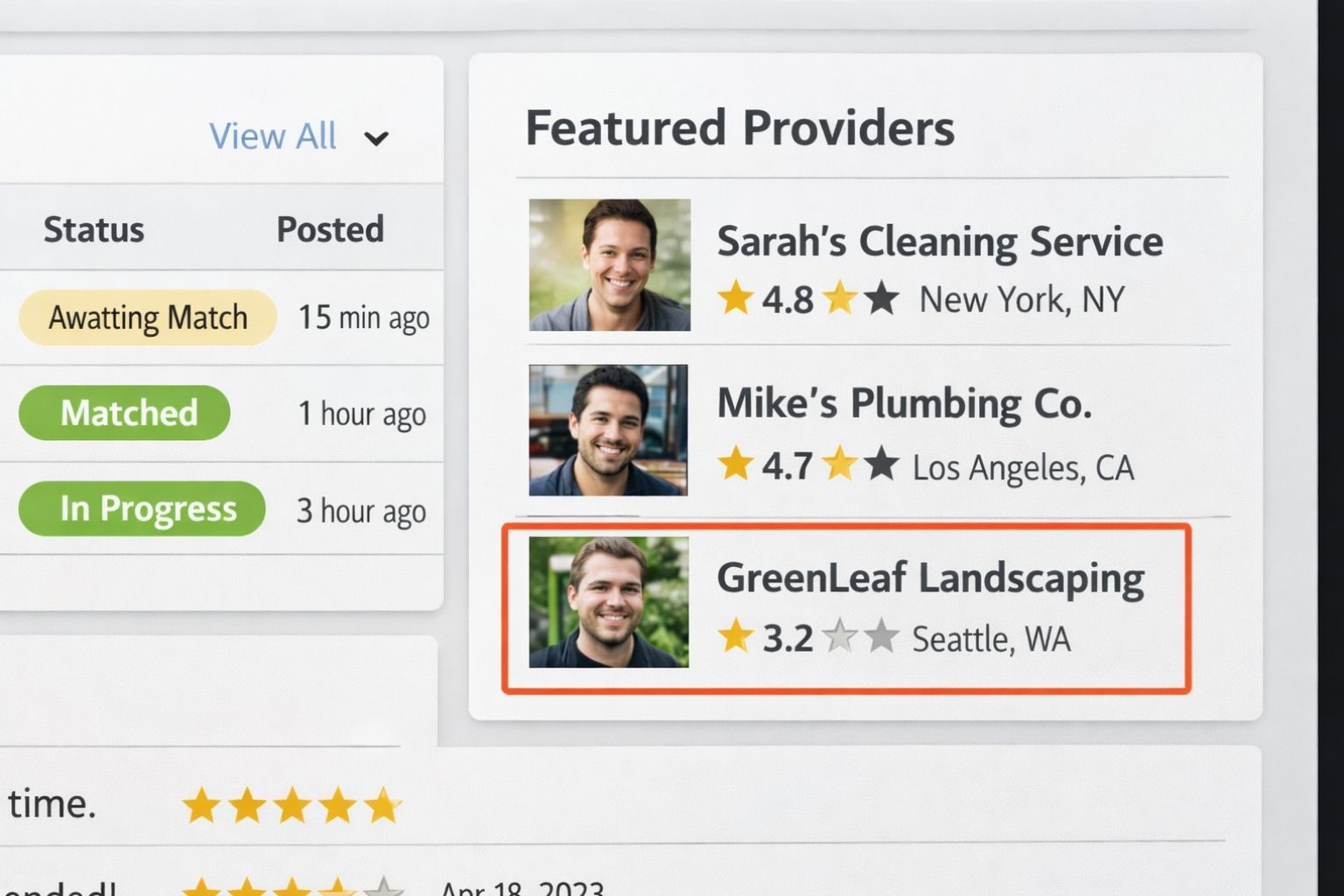
What is it? The Uber for Local Expertise that nobody has built correctly yet. Instead of a directory, this AI vets local service providers (plumbers, HVAC) based on reviews, past work, and pricing transparency, then autonomously matches homeowners with the best option, not just the one who paid for ads.
Key Features:AI analysis of provider reviews and complaint history.Automated quote standardization (comparing apples to apples).Calendar integration for instant booking.
Best For: Homeowners tired of vetting; Service pros who want qualified leads.
Pricing: Transaction fee per match or subscription for providers.
Market Benchmark: Platforms like Angi or Thumbtack charge providers $15-$85 per lead regardless of conversion. A 10% "success fee" model is highly disruptive here.
Market Benchmark: Platforms like Angi or Thumbtack charge providers $15-$85 per lead regardless of conversion. A 10% "success fee" model is highly disruptive here.
Pros & Cons: High demand for trust in local services, but requires overcoming the chicken and egg marketplace problem.
2. AI Niche Course Platform for Micro-Experts
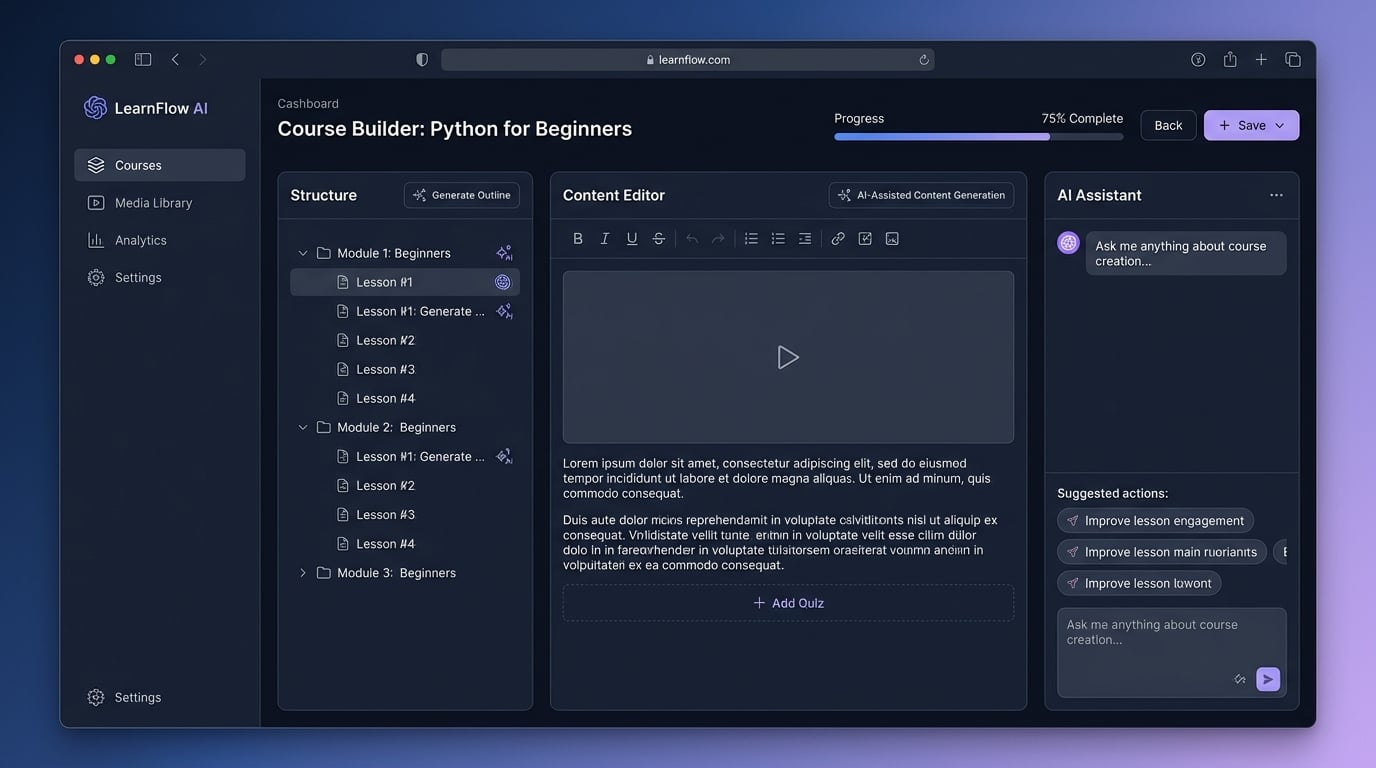
What is it? A platform for people with deep expertise (e.g., specialized DevOps, sommelier skills) who suck at marketing. The AI handles copywriting, curriculum structuring, and email sequences, letting the expert just teach.
Key Features:Auto-generation of course outlines from brain-dumps.AI marketing asset creation (landing pages, emails).Automated student feedback summaries.
Best For: Subject matter experts with no marketing skills.
Pricing: Revenue share (20-30%) or monthly SaaS fee.
Market Benchmark: Kajabi charges ~$150/mo just for the tool. A revenue-share model with zero upfront cost attracts hesitant first-time creators.
Market Benchmark: Kajabi charges ~$150/mo just for the tool. A revenue-share model with zero upfront cost attracts hesitant first-time creators.
Pros & Cons: Empowers a massive underserved market, but competes indirectly with Teachable/Kajabi.
Build These Ideas Fast
Don't spend months coding. Use AI to build your AI SaaS. Tools like Lovable allow you to spin up full-stack apps in minutes.
Join the Community3. AI for Construction Bid Accuracy
What is it? General contractors bleed money on inaccurate bids. According to McKinsey’s Imagining Construction’s Digital Future (2016), large construction projects typically take 20% longer to finish than scheduled and are up to 80% over budget. This AI ingests project specs, regional material costs, and historical data to predict true profitability and flag hidden costs before a bid is submitted.
Key Features:PDF blueprint analysis.Real-time material price scraping.Profit margin risk scoring.
Best For: General Contractors and Construction Firms.
Pricing: High-ticket monthly subscription ($200+) or per-bid fee.
Market Benchmark: Enterprise estimation software like HeavyBid can cost thousands annually per seat. A $200/mo tool that prevents a single $10k loss pays for itself instantly.
Market Benchmark: Enterprise estimation software like HeavyBid can cost thousands annually per seat. A $200/mo tool that prevents a single $10k loss pays for itself instantly.
Pros & Cons: Massive ROI for users makes sales easier; requires access to complex industry data.
4. AI Insurance Claim Pre-Screening
What is it? An enterprise tool that screens insurance claims against policy language to auto-approve simple cases and flag risks for human review. It reduces the 40% of time adjusters spend on clear-cut cases.
Key Features:Natural Language Processing (NLP) for policy logic.Fraud detection patterns.Auto-routing workflows.
Best For: Boutique insurance firms and TPA (Third Party Administrators).
Pricing: Enterprise licensing or volume-based pricing.
Market Benchmark: Custom enterprise implementations from major tech consultancies cost six figures. A specialized SaaS at $2k/mo is a budget-friendly alternative for boutique firms.
Market Benchmark: Custom enterprise implementations from major tech consultancies cost six figures. A specialized SaaS at $2k/mo is a budget-friendly alternative for boutique firms.
Pros & Cons: Huge ACV (Annual Contract Value); long sales cycles.
5. AI Real Estate Comps (That Actually Work)
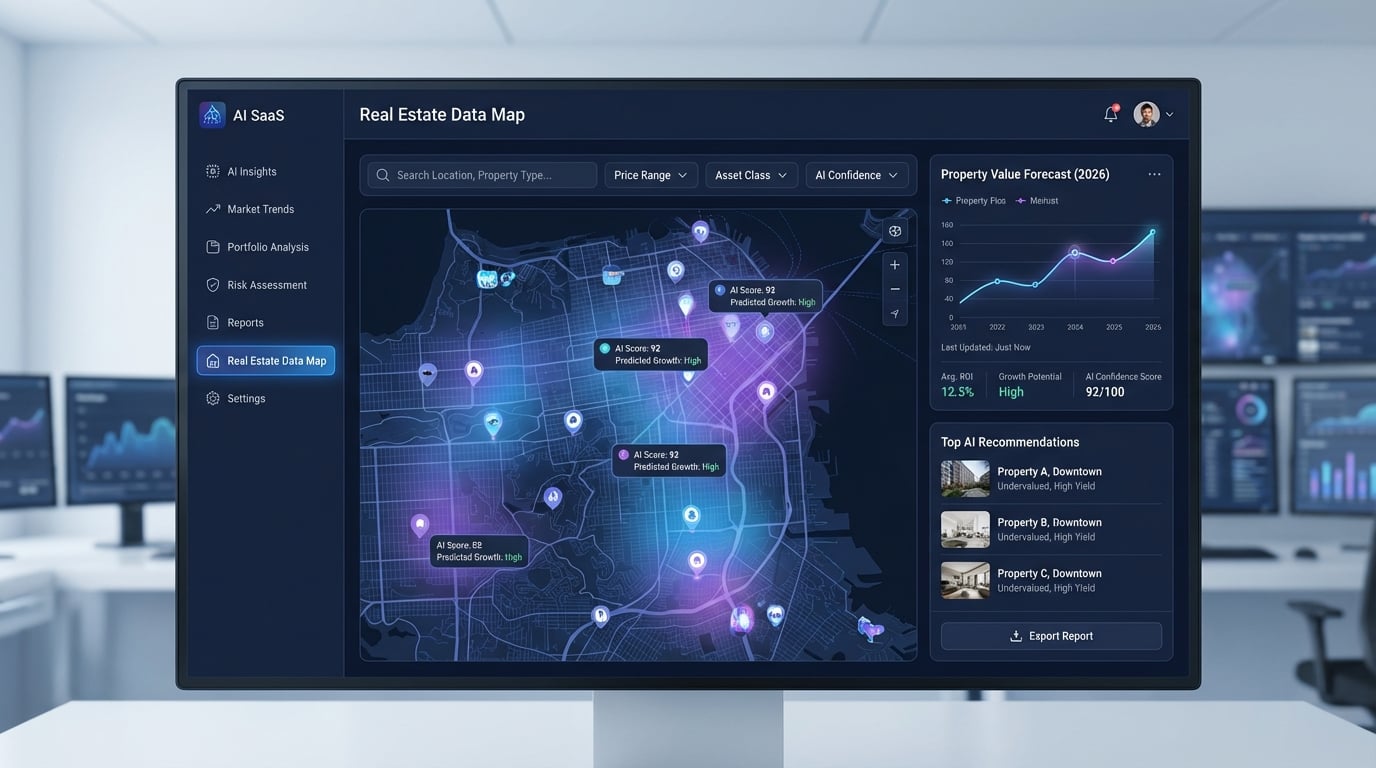
What is it? Automated valuation models (AVMs) like the Zestimate often lag behind market reality. Zillow’s own accuracy data (updated regularly) indicates that for off-market homes, the median error rate hovers around 6.9%, which can mean missing the mark by $30,000+ on an average home. This AI scrapes MLS data daily, accounting for price drops, local micro-trends, and market psychology to give agents defensible pricing strategies.
Key Features:Hyper-local trend analysis.Renovation ROI estimator.Competitor listing fatigue tracking.
Best For: Real estate agents and appraisers.
Pricing: Monthly SaaS ($50-$100/mo).
Market Benchmark: Professional data tools like HouseCanary are priced for enterprise lenders. A $50/mo tool for individual agents undercuts the market while offering superior usability.
Market Benchmark: Professional data tools like HouseCanary are priced for enterprise lenders. A $50/mo tool for individual agents undercuts the market while offering superior usability.
Pros & Cons: Agents pay for tools that win listings; dependent on MLS data access APIs.
6. AI Podcast Audio Engineer
What is it? A "drop and done" tool. Upload raw audio, and the AI levels voices, removes background noise, cuts "ums" intelligently (without ruining cadence), and adds intro/outros automatically.
Key Features:One-click mastering.Smart filler word removal.Speaker identification and balancing.
Best For: Hobbyist podcasters and B2B marketing teams.
Pricing: Freemium or usage-based (minutes processed).
Market Benchmark: Hiring a human editor costs $50-$150 per episode. Descript charges ~$12-$24/user/mo but has a steep learning curve. A simple, automated $19/mo tool captures the pro-sumer market.
Market Benchmark: Hiring a human editor costs $50-$150 per episode. Descript charges ~$12-$24/user/mo but has a steep learning curve. A simple, automated $19/mo tool captures the pro-sumer market.
Pros & Cons: High volume market; competes with Descript (need to be simpler/faster).
7. AI for Medical Coding Accuracy
What is it? Translating doctor notes into billing codes is error-prone. This AI acts as a pre-submission auditor, flagging potential rejections before they go to insurance. It’s a compliance money-printer.
Key Features:ICD-10/CPT code verification.Missed revenue opportunity flagging.Audit trail generation.
Best For: Private clinics and medical billing companies.
Pricing: Per-provider subscription or % of recovered revenue.
Market Benchmark: Denied claims cost providers ~$118 per claim to rework. Pricing this at $299/provider/mo is a fraction of the cost of a single human coder.
Market Benchmark: Denied claims cost providers ~$118 per claim to rework. Pricing this at $299/provider/mo is a fraction of the cost of a single human coder.
Pros & Cons: Essential B2B service; requires strict HIPAA compliance measures.
8. AI Regulatory Compliance Generator
What is it? For industries like pharma or aviation, documentation is a nightmare. This AI generates first drafts of regulatory docs based on current FDA/ISO guidelines and user inputs.
Key Features:Template libraries for ISO/FDA standards.Version control with AI change summaries.Citation linking to regulations.
Best For: Compliance officers in regulated SMBs.
Pricing: High-tier SaaS ($500+/mo).
Market Benchmark: Specialized consultants charge $200+/hour. A $500/mo tool that replaces 20 hours of consulting work offers 10x ROI.
Market Benchmark: Specialized consultants charge $200+/hour. A $500/mo tool that replaces 20 hours of consulting work offers 10x ROI.
Pros & Cons: Massive time saver; high liability if the AI hallucinates (needs human-in-the-loop).
Need Help With GTM?
Building the product is half the battle. You need a strategy to get it to market. Read our guide on Launch & Scale Frameworks.
Join the Community9. AI Influencer Contract Negotiator
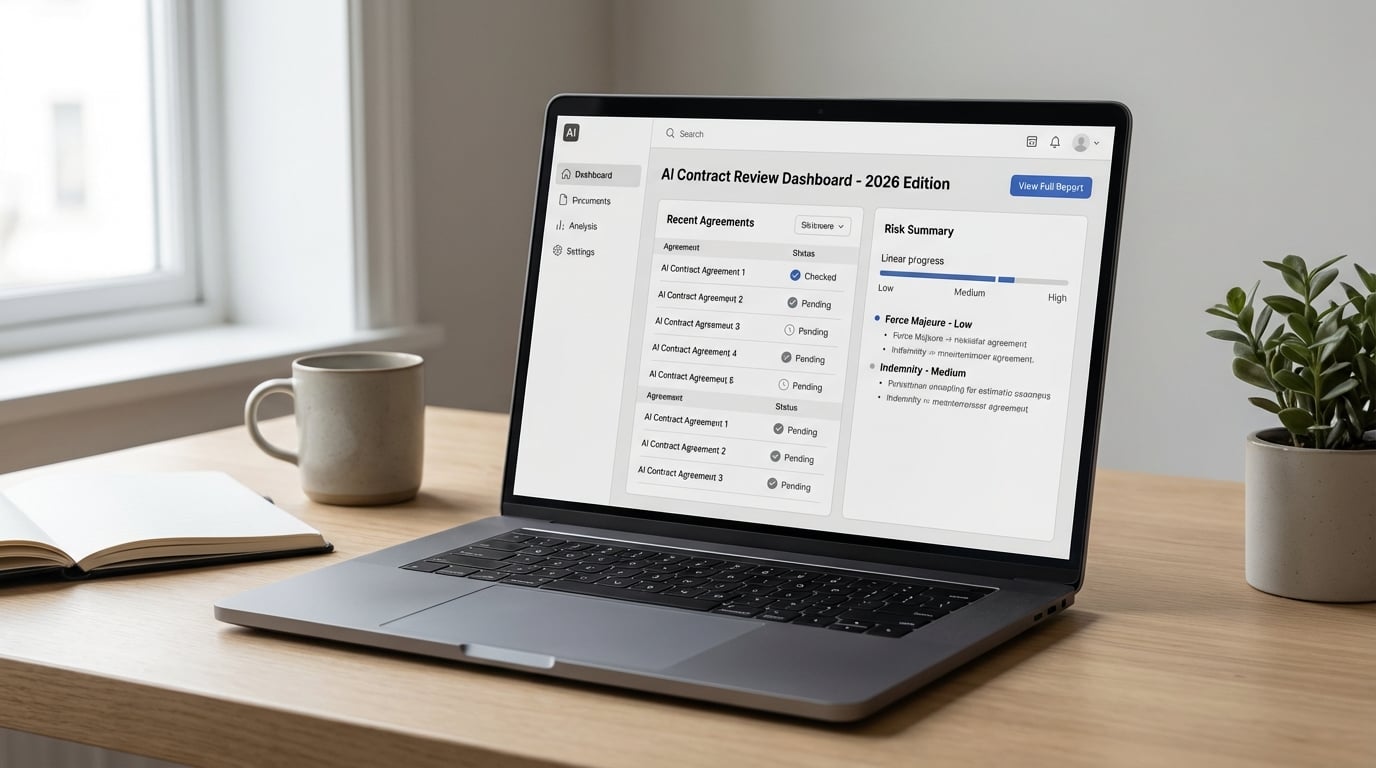
What is it? Influencers get exploited by bad contracts. This tool scans brand agreements, flags predatory clauses (like perpetual usage rights), and suggests redlines.
Key Features:"Red flag" highlighting.Plain English explainers.Counter-offer generator.
Best For: Creators, Influencers, Talent Managers.
Pricing: Low monthly fee or per-contract fee.
Market Benchmark: Entertainment lawyers charge $300+/hour. A $15/month subscription or $25/contract fee is a no-brainer for micro-influencers.
Market Benchmark: Entertainment lawyers charge $300+/hour. A $15/month subscription or $25/contract fee is a no-brainer for micro-influencers.
Pros & Cons: Viral potential among creators; lower LTV (Lifetime Value) per user.
10. AI Menu Profitability Optimizer
What is it? Restaurants know sales, but often miss margin data. This AI connects to POS and supplier invoices to tell owners: "Stop selling the burger, promote the pasta—you make 30% more."
Key Features:Ingredient cost tracking vs. menu price.Dynamic menu engineering suggestions.Waste reduction insights.
Best For: Independent restaurant owners.
Pricing: Monthly subscription ($99/mo).
Market Benchmark: Full-stack restaurant management systems (like Toast or MarginEdge) can cost hundreds per month. A standalone $99 tool for margin analysis is an easy add-on sale.
Market Benchmark: Full-stack restaurant management systems (like Toast or MarginEdge) can cost hundreds per month. A standalone $99 tool for margin analysis is an easy add-on sale.
Pros & Cons: Direct impact on bottom line; difficult sales channel (restaurants are busy).
Business Model Analysis: Ideas 1-10
| Idea | Suggested Pricing | Market Benchmark |
|---|---|---|
| 1. Local Matching | Transaction Fee (10%) | Angi Leads: $15-$85/lead |
| 2. Course Platform | Rev Share (20%) | Kajabi: $150/mo |
| 3. Construction Bids | $200+/mo | Enterprise Software: $3k+/yr |
| 4. Insurance Claims | $2,000/mo (Enterprise) | Consulting: $100k+ projects |
| 5. Real Estate Comps | $50/mo | HouseCanary: Enterprise pricing |
| 6. Podcast Audio | $19/mo | Human Editor: $100/ep |
| 7. Medical Coding | $299/mo per provider | Denied Claims: $118 each |
| 8. Compliance Gen | $500/mo | Consultants: $200/hr |
| 9. Contract Review | $15/mo or $25/doc | Lawyer: $300/hr |
| 10. Menu Profit | $99/mo | Full POS Systems: $$$ |
11. AI for Hyper-Specific Job Matching

What is it? LinkedIn is too broad. This AI focuses on deep verticals (e.g., Underwater Welders, Rust Developers) and matches based on validated skills and nuanced project history, not just keywords.
Key Features:Skill verification challenges.Cultural fit assessments.Blind resume matching.
Best For: Niche recruitment agencies.
Pricing: Placement fee or subscription for access.
Market Benchmark: Headhunters charge 20-30% of first-year salary ($20k+). A flat access fee of $499/mo for vetted candidates is highly competitive.
Market Benchmark: Headhunters charge 20-30% of first-year salary ($20k+). A flat access fee of $499/mo for vetted candidates is highly competitive.
Pros & Cons: High value per match; hard to build initial liquidity.
12. AI Content Repurposing Engine
What is it? Turn one blog post into a Twitter thread, a LinkedIn carousel, a TikTok script, and a newsletter—all optimized for the specific algorithms of those platforms.
Key Features:Platform-specific tone adjustment.Visual asset generation.Scheduling integration.
Best For: Marketing teams and solo founders.
Pricing: Tiered SaaS ($29-$99/mo).
Market Benchmark: Agencies charge $2k+/mo for this service. Tools like OpusClip focus on video; a text-to-multimedia suite at $49/mo fills the gap.
Market Benchmark: Agencies charge $2k+/mo for this service. Tools like OpusClip focus on video; a text-to-multimedia suite at $49/mo fills the gap.
Pros & Cons: High churn potential if quality drops; huge time saver.
13. AI Churn Predictor for SMBs
What is it? Enterprise tools like Gainsight are too expensive for small SaaS. This tool connects to Stripe and Intercom to flag customers showing "pre-churn" behavior (login drops, support ticket spikes) 30 days out.
Key Features:Health score calculation.Automated re-engagement workflows.Revenue at risk forecasting.
Best For: Bootstrapped SaaS founders.
Pricing: Based on MRR tracked.
Market Benchmark: Gainsight starts at tens of thousands per year. An SMB tool starting at $99/mo is accessible to the massive mid-market.
Market Benchmark: Gainsight starts at tens of thousands per year. An SMB tool starting at $99/mo is accessible to the massive mid-market.
Pros & Cons: Pays for itself with one saved customer; requires integrations.
Pro Tip: If you are building this, focus on pricing it right. Check our guide on SaaS pricing models to maximize revenue.
Opportunity Matrix: Which Idea Fits You?
| Idea Category | Tech Difficulty (1-5) | Sales Difficulty (1-5) | Revenue Potential (1-5) |
|---|---|---|---|
| Local Service Matching | 4 | 3 | 5 |
| Medical Coding AI | 4 | 5 | 5 |
| Content Repurposing | 2 | 2 | 3 |
| Construction Bidding | 3 | 3 | 4 |
14. Lease Review AI for Tenants
What is it? Legal advice is expensive. This AI scans residential or commercial lease PDFs instantly to flag illegal clauses, weird stipulations, and areas for negotiation, explaining them in plain English.
Key Features:Jurisdiction-specific legal checks."Plain English" summaries of legalese.Risk severity scoring.
Best For: Renters, SMB owners, and Realtors.
Pricing: Per-document fee ($29) or subscription for agents.
Market Benchmark: A lawyer's review costs $500 minimum. A $29 instant report is an impulse buy for anxious renters.
Market Benchmark: A lawyer's review costs $500 minimum. A $29 instant report is an impulse buy for anxious renters.
Pros & Cons: High utility and easy to market; requires keeping legal databases updated.
15. PRD Generator from Chaos
What is it? Product Managers waste hours formatting documents. This tool takes messy inputs—Slack threads, support tickets, and rough notes—and structures them into a professional Product Requirements Document (PRD).
Key Features:Automatic user story generation.Integration with Jira/Linear.Acceptance criteria suggestion.
Best For: Product Managers and Founders.
Pricing: Per-seat SaaS ($30/mo).
Market Benchmark: Competes with general tools like Notion AI ($10/mo add-on), but wins on specific integration and formatting for Product Managers.
Market Benchmark: Competes with general tools like Notion AI ($10/mo add-on), but wins on specific integration and formatting for Product Managers.
Pros & Cons: Solves a universal pain point; competes with Notion AI features.
16. AI Warehouse Layout Optimizer

What is it? Inefficient walking paths cost logistics companies millions. This AI analyzes inventory turnover and order composition to design the most efficient bin placements and picker routes.
Key Features:Walking path simulation.SKU velocity heatmaps.Restocking recommendation engine.
Best For: 3PLs and E-commerce warehouses.
Pricing: High-tier enterprise SaaS or consulting hybrid.
Market Benchmark: Supply chain consultants charge $200k+ per project. A $2k/mo SaaS subscription is extremely attractive for mid-sized 3PLs.
Market Benchmark: Supply chain consultants charge $200k+ per project. A $2k/mo SaaS subscription is extremely attractive for mid-sized 3PLs.
Pros & Cons: Extremely high ROI; complex integration with existing WMS (Warehouse Management Systems).
17. Contextual Pricing Intelligence
What is it? Knowing that a competitor changed prices is easy; knowing why is hard. This AI correlates price changes with stock levels, news, and seasonality to predict competitor strategy.
Key Features:Competitor inventory tracking.Promo detection logic.Margin impact modeling.
Best For: E-commerce brands and retailers.
Pricing: Tiered SaaS based on SKUs tracked.
Market Benchmark: Enterprise tools like Profitero are expensive and complex. A mid-market solution at $199/mo fills the gap for Shopify Plus brands.
Market Benchmark: Enterprise tools like Profitero are expensive and complex. A mid-market solution at $199/mo fills the gap for Shopify Plus brands.
Pros & Cons: Strategic value add; requires robust scraping infrastructure.
18. Patient Education Generator
What is it? Discharge papers are often generic and confusing. This AI generates custom post-care instructions based on diagnosis codes, patient age, language, and reading level.
Key Features:Multi-language translation.Reading level adjustment.Visual aid generation.
Best For: Hospitals, Urgent Care, Private Practice.
Pricing: Enterprise license or volume pricing.
Market Benchmark: Readmission penalties cost hospitals millions. A $5k/month hospital-wide license is negligible compared to the cost of Medicare penalties.
Market Benchmark: Readmission penalties cost hospitals millions. A $5k/month hospital-wide license is negligible compared to the cost of Medicare penalties.
Pros & Cons: Improves patient outcomes and reduces readmission; HIPAA compliance is mandatory.
19. Brand Infringement Monitor
What is it? Knock-offs kill D2C brands. This AI visually scans marketplaces like Etsy, Amazon, and Alibaba to identify counterfeit products using image recognition, then automates the takedown request.
Key Features:Visual similarity search.Automated DMCA/takedown generation.Seller network mapping.
Best For: D2C Brands and Creators.
Pricing: Monthly "Insurance" fee ($99-$299/mo).
Market Benchmark: Legal services for IP protection cost thousands. Red Points and similar enterprise tools are often out of reach for smaller brands.
Market Benchmark: Legal services for IP protection cost thousands. Red Points and similar enterprise tools are often out of reach for smaller brands.
Pros & Cons: Clear value proposition; fighting platform bureaucracy can be tough.
20. Cold Email Researcher

What is it? Generic spam is dead. This tool automates the "research" phase of prospecting by scanning a prospect's LinkedIn, recent news, and podcasts to write a hyper-relevant "first line" for your email.
Key Features:News and podcast transcript scanning."Hook" generation based on interests.Tone matching.
Best For: SDRs and Sales Agencies.
Pricing: Usage-based (per prospect researched).
Market Benchmark: Clay.com runs ~$149+/mo for advanced features. A simplified, research-only tool at $49/mo lowers the barrier to entry.
Market Benchmark: Clay.com runs ~$149+/mo for advanced features. A simplified, research-only tool at $49/mo lowers the barrier to entry.
Pros & Cons: Massively increases open rates; relies on data availability.
Business Model Analysis: Ideas 11-20
| Idea | Suggested Pricing | Market Benchmark |
|---|---|---|
| 11. Job Matching | $499/mo access fee | Headhunters: 20-30% salary |
| 12. Content Engine | $49/mo | Agencies: $2k+/mo |
| 13. Churn Predictor | $99/mo | Gainsight: Enterprise $$$ |
| 14. Lease Review | $29 per review | Lawyers: $500+ |
| 15. PRD Generator | $30/mo | Notion AI: $10/mo |
| 16. Warehouse Layout | $2k/mo | Consultants: $200k+ |
| 17. Pricing Intel | $199/mo | Profitero: Enterprise |
| 18. Patient Education | $5k/mo license | Medicare Penalties: $$$$ |
| 19. Brand Monitor | $99-$299/mo | Red Points: Enterprise |
| 20. Email Research | $49/mo | Clay.com: $149+/mo |
21. Tech Debt Documenter
What is it? Developers struggle to explain "refactoring" to business stakeholders. This AI scans codebases to identify complexity and translates technical debt into "business risk" language (e.g., "Risk of outage: High").
Key Features:Code complexity heatmaps.Business impact translation."Bus Factor" analysis.
Best For: CTOs, Dev Agencies, Product Owners.
Pricing: Per-repository pricing.
Market Benchmark: Static analysis tools (SonarQube) are technical. A tool that translates this to business speak can command a premium $200/mo consultant-style fee.
Market Benchmark: Static analysis tools (SonarQube) are technical. A tool that translates this to business speak can command a premium $200/mo consultant-style fee.
Pros & Cons: Bridges the gap between Eng and Biz; hard to quantify "saved" money.
22. Local SEO Auto-Pilot
What is it? Plumbers and bakers don't have time to log into Google My Business. This AI autonomously posts geo-tagged photos, replies to reviews, and updates citations to keep them ranking in the "Map Pack".
Key Features:Automated review responses.Geo-tagged image uploading.Local citation monitoring.
Best For: Local Service Businesses (SMBs).
Pricing: Flat monthly fee ($49/mo).
Market Benchmark: SEO Agencies charge $500-$1000/mo for local management. An automated $49/mo tool is a massive disruption.
Market Benchmark: SEO Agencies charge $500-$1000/mo for local management. An automated $49/mo tool is a massive disruption.
Pros & Cons: "Set and forget" appeal; high churn if results aren't immediate.
23. Sales Commission Calculator
What is it? Sales comps are often calculated in breaking spreadsheets. This AI connects to your CRM, ingests complex commission plans, and calculates payouts in real-time, reducing disputes.
Key Features:Natural language rule builder.Real-time payout forecasting for reps.Dispute resolution workflow.
Best For: RevOps and Sales Leaders.
Pricing: Per rep/user monthly fee.
Market Benchmark: Spiff or CaptivateIQ are expensive enterprise platforms ($50+/user/mo + high implementation fees). A self-serve tool at $15/user wins the SMB market.
Market Benchmark: Spiff or CaptivateIQ are expensive enterprise platforms ($50+/user/mo + high implementation fees). A self-serve tool at $15/user wins the SMB market.
Pros & Cons: Solves a major pain point; integration with messy CRMs is difficult.
24. Pitch Deck Storyteller
What is it? Founders have data, but lack narrative. This AI takes raw metrics and text dumps to structure a compelling "Sequoia-style" narrative flow, ensuring the story lands with investors.
Key Features:Narrative arc optimization.Text-to-slide layout generation.Investor Q&A prep based on deck content.
Best For: Early-stage Founders.
Pricing: One-time fee or monthly subscription.
Market Benchmark: Pitch deck consultants charge $2k-$10k. A $100 one-time fee or $30/mo subscription is highly accessible for bootstrappers.
Market Benchmark: Pitch deck consultants charge $2k-$10k. A $100 one-time fee or $30/mo subscription is highly accessible for bootstrappers.
Pros & Cons: High emotional value for founders; one-time use nature makes LTV tricky.
25. Academic Insight Extractor
What is it? Business consultants need data but don't have time to read 50-page white papers. This AI ingests dense academic PDFs and extracts actionable business tactics and statistics.
Key Features:Jargon-to-English translation.Key statistic extraction.Executive summary generation.
Best For: Consultants, Strategists, Researchers.
Pricing: Monthly subscription.
Market Benchmark: Research assistants or specialized databases (like Statista) are costly. A $30/mo tool for rapid synthesis offers high personal productivity ROI.
Market Benchmark: Research assistants or specialized databases (like Statista) are costly. A $30/mo tool for rapid synthesis offers high personal productivity ROI.
Pros & Cons: High utility for knowledge workers; competes with generic LLM wrappers.
26. Mortgage Pre-Qual AI
What is it? Static forms have high drop-off rates. This conversational AI agent interviews applicants, collects necessary documents via chat, and pre-fills the application forms 24/7.
Key Features:Document OCR and verification.Income calculation logic.Friendly, conversational interface.
Best For: Mortgage Brokers and Loan Officers.
Pricing: Per lead processed or flat SaaS fee.
Market Benchmark: Buying mortgage leads costs $50-$100 each. A tool that increases conversion on existing traffic by 20% is worth $500+/mo to a busy broker.
Market Benchmark: Buying mortgage leads costs $50-$100 each. A tool that increases conversion on existing traffic by 20% is worth $500+/mo to a busy broker.
Pros & Cons: Directly increases lead conversion; requires handling sensitive financial data.
27. Vendor Comparison Matrix
What is it? Procurement teams hate comparing 10 different vendor PDFs. This AI reads RFPs and vendor responses to autonomously build a side-by-side decision matrix in Excel.
Key Features:Feature extraction and normalization.Compliance gap detection.Pricing standardization.
Best For: Procurement Officers and Enterprise Buyers.
Pricing: Enterprise seat licensing.
Market Benchmark: e-Procurement suites (Coupa, Ariba) are massive investments. A lightweight "decision support" tool at $5k/year is an easy discretionary budget purchase.
Market Benchmark: e-Procurement suites (Coupa, Ariba) are massive investments. A lightweight "decision support" tool at $5k/year is an easy discretionary budget purchase.
Pros & Cons: Saves days of manual work; niche audience but high willingness to pay.
Business Model Analysis: Ideas 21-27
| Idea | Suggested Pricing | Market Benchmark |
|---|---|---|
| 21. Tech Debt | $200/mo per repo | SonarQube: High technical barrier |
| 22. Local SEO | $49/mo | Agencies: $500-$1000/mo |
| 23. Sales Comm | $15/user/mo | Spiff/CaptivateIQ: $50+ |
| 24. Pitch Deck | $30/mo or one-time | Consultants: $2,000+ |
| 25. Insight Extractor | $30/mo | Research Assistants: $$$ |
| 26. Mortgage Pre-Qual | $500/mo or lead fee | Lead Buying: $100/lead |
| 27. Vendor Matrix | $5,000/year | Coupa/Ariba: $$$$$ |
Ready to Launch?
Stop analyzing and start shipping. Use our checklist to ensure you don't miss a step.
Get Free ChecklistHow to Validate These Ideas Before Building
The biggest mistake founders make is writing code before they have a customer. For any of these ai saas ideas, follow this step-by-step validation loop to ensure you aren't wasting months of your life.
Step 1: Find the "Watering Hole" & Interview
Don't guess what the problem is. Go where your users hang out. If you are targeting Idea #3 (Construction), go to the ContractorTalk forums or local Chamber of Commerce meetups. If you are targeting Idea #15 (PRDs), browse the r/ProductManagement subreddit using Reddit marketing tools. Your goal is to DM 10 people and ask: "Walk me through how you currently handle [Problem X]. What is the most annoying part?"
Step 2: Sell the Result (Not the AI)
When you pitch your solution, nobody cares about your tech stack. They care about the outcome. Don't say "I have an AI agent." Say "I can stop you from losing money on bad bids." If they reply with "That would be nice," you have nothing. If they ask "How much does that cost?" or "Can I try it next week?", you have a signal.
Step 3: The "Concierge" MVP
Before you build the software, do the work manually. If you are building the "Lease Review AI," ask a prospect to send you their lease. Run it through ChatGPT yourself, manually clean it up, and send them the PDF report. If they are thrilled with the manual result, you have validated the value proposition. If they won't pay for the result when you do it, they won't pay for the software.
Step 4: The "Painted Door" Presale
Spin up a simple landing page using a tool like Framer or Carrd. Describe the features as if they exist. Add a "Get Early Access" button that leads to a $10 deposit or a credit card form. If people click but don't pay, you have a marketing problem or a pricing mismatch. If they pull out their wallet before the product exists, you are ready to build. This transforms abstract ai saas projects into tangible ai saas products before you write a single line of backend code.
Pros
- • Targeting "boring" niches reduces competition from big tech.
- • Vertical AI commands higher pricing power than generic tools.
- • Solves urgent, expensive problems (compliance, waste, legal risks).
Cons
- • Requires deeper domain knowledge than building a generic wrapper.
- • Sales cycles in B2B (like construction or medical) can be slower.
- • Data access (APIs) can be a bottleneck for some ideas.
Pro Tip
Frequently Asked Questions
Which of these AI SaaS ideas is easiest for a solo founder?
Ideas like the "Content Repurposing Engine" or "Podcast Audio Engineer" are technically easier to build using existing APIs and have a product-led growth motion suitable for solo founders.
Are AI wrappers still profitable in 2026?
Generic wrappers are dying, but "thin" applications that solve a very specific vertical workflow (like Lease Review) are highly profitable because they offer convenience and domain expertise.
How do I market these boring B2B ideas?
Focus on "Cold Outreach" and SEO for high-intent keywords. For example, rank for "construction bid error calculator" rather than generic AI terms. See our guide on B2B SEO strategies.
#saas ideas#startup ideas

Join the Newsletter
Get growth tactics and launch strategies delivered to your inbox for builders like you.
Unsubscribe at any time.
Recommended
in building
Why Your Lovable Blog Posts Don't Appear in Google (And How to Actually Fix It)
6 months agobuilding
Read
The Lovable SEO Fix (SEO God Mode Module) vs Prerender.io: Honest Comparison
6 months agobuilding
Read
SEO God Mode (The Lovable SEO Fix) vs LovableHTML: Honest Comparison
6 months agobuilding
Read
Built it? Get it seen.
Get featured.
Reach beyond your site.
Put your tool in front of builders and create more ways for people to find you.
- Featured on LaunchRocket.ioA place to showcase your tool.
- 50 directories. Selected for your niche.SaaS, tool and business sites. We handle the submissions.
$97One payment. No subscription.
Get my tool featured